
The 7 Finance Tasks AI Should NEVER Approve (And Why Your Controller Agrees)

Here's the scenario that keeps compliance teams up at night.
An AI tool generates a journal entry suggestion. It looks reasonable. The amounts reconcile. The account codes map correctly. A junior analyst reviews it, assumes the AI got it right without independent validation, clicks approve, and the entry posts to the ledger. No controller sign-off. No materiality assessment. No audit trail tying the entry back to a human decision maker.
Six months later, during an audit, the question comes, "Who approved this?"
The answer shouldn't be "the algorithm did."
AI-approved, in the finance context, means an AI system executes a decision without a human in the decision loop. The AI can suggest, draft, flag anomalies, and surface insights. What it should not do autonomously is make judgment calls that carry legal, compliance, or reputational exposure.
The line isn't arbitrary. It's where finance stops being a mechanical process and starts requiring judgment that a machine cannot reliably make. This is also why many enterprises now invest in AI consulting for finance before scaling automation across accounting, compliance, and revenue operations.
Why 1 in 5 organizations experienced a data breach or security incident linked to GenAI tools
According to IBM's Cost of a Data Breach Report, 1 in 5 organizations have experienced a data breach or security incident linked to GenAI tools. This number should make every finance leader reconsider their AI rollout plan. That stat comes from near-zero in 2022.
The breach vector isn't what most people expect. It's not hackers exploiting the AI. It's employees uploading sensitive data into unapproved tools, or AI systems synthesizing information from sources they shouldn't have access to. Often, staff route traffic through personal software or the fastest VPN they can find to bypass internal controls. Rule-based controls were never built for either pattern, which is how legacy DLP falls short once AI is in the workflow.
For finance, that means journal entries, contract terms, pricing data, and customer information may already be residing in an unaudited AI model's training corpus.
The second-order AI accounting risk is worse. Once AI touches the data, determining whether a particular transaction was appropriately reviewed becomes a forensic exercise, especially when finance teams lack an independent AI checker to validate how AI-generated outputs were created, reviewed, and approved. If your audit trail reflects "AI-approved," SOC 2 auditors will escalate follow-up questions you don't want to answer.
This is why governance frameworks embedded in revenue automation software like Zenskar use deterministic logic for all financial computations to ensure that when AI touches finance data, there's a control environment that can withstand audit and regulatory scrutiny.
The broader discipline of financial risk management provides the conceptual foundation for these controls — mapping exposures across credit, operational, and liquidity risk categories before any automation layer is introduced.
The 3-tier AI finance framework (draft, execute, review)
Here's the mental model that should govern every finance AI deployment. Three tiers. Three distinct levels of risk. Three corresponding levels of human oversight.
- Tier 1, AI drafts, human reviews: This is the lowest-risk zone. AI accelerates the work, but a human with appropriate authority signs off before anything becomes official. The AI is a research assistant, not a decision maker.
- Tier 2, AI executes routine processes, human oversees exceptions: This is where most revenue automation operates. The AI product runs the workflow, but humans define the rules and intervene when thresholds are breached. The system logs every action, with complete and traceable audit trails.
- Tier 3, AI acts without a human review checkpoint: This third tier is the problem. The place where AI approvals cross the line from automation into audit and control exposure. This tier doesn't exist in well-governed finance stacks. If your revenue automation platform or ERP allows this, it's a control gap, not a feature.
Let’s do a deep dive into a few tasks that sit in this forbidden zone of Tier 3.
The 7 finance tasks AI should NEVER approve autonomously
These aren't theoretical. They're grounded in real controller feedback, audit standards, and control gaps, which are often not visible in legacy finance tools. Each task is a place where AI can assist, but autonomous approval creates material risk.
Task 1: Journal entries above materiality thresholds
Why AI gets it wrong: AI can suggest a debit and a credit. It cannot reliably assess whether that entry is above your company's materiality threshold, a concept tied to the business context AI doesn't fully understand.
What should happen instead: AI drafts the entry. A controller with knowledge of the business context reviews it against materiality guidelines. If above threshold, it requires a controller sign-off before posting.
The red flag symptom: AI Journal entries risk includes posting automatically without a review gate tied to dollar thresholds or account significance.
Journal entries are the most fundamental transactions in accounting. They're also the place where fraud, misstatements, and errors hide in plain sight. AI can generate syntactically correct entries. It cannot understand whether recording $200,000 in prepaid expenses in the wrong period obscures a revenue shortfall.
Task 2: Revenue recognition adjustments without human sign-off
Why AI gets it wrong: ASC 606 requires judgment calls. Contract modifications, retrospective adjustments, and variable consideration estimates all involve interpreting intent, not just crunching numbers.
What should happen instead: AI flags contracts that require revenue reallocation or reassessment. A reviewer with ASC 606 expertise reviews the specific contract terms and approves the adjustment.
The red flag symptom: Revenue recognition AI automation adjustments triggering mid-period with no documented approver or rationale.
Revenue recognition under ASC 606 isn't mechanical. It's interpretive. AI output must be reviewed against the specific contract language, the commercial context, and the company's revenue recognition policy. Let AI surface the transactions that require review. Don't let it make the call.
Task 3: Contract modification accounting treatment
Why AI gets it wrong: Determining whether an upsell represents a new contract or a modification under ASC 606 depends on commercial context, not pattern matching. AI can't assess whether the change results in distinct goods or services.
What should happen instead: AI flags potential contract modifications. Finance reviews the contract terms, determines the classification, and documents the reasoning.
The red flag symptom: Revenue recognition timing shifting by months with no evidence of human evaluation of the contract modification rules.
The risk here is silent. A misclassified modification can shift revenue by quarters. AI doesn't understand whether your customer views an add-on as distinct from the original purchase. That's a judgment call that belongs to someone who understands both the contract terms and the underlying commercial context.
Task 4: Write-offs and bad debt expense approvals
Why AI gets it wrong: Approving a write-off isn't just about aging. It requires judgment on collectability, potential legal action, and whether write-off triggers tax implications.
What should happen instead: AI surfaces accounts past due thresholds. A controller evaluates collectability, considers the legal context, and approves the write-off with documented rationale.
When financing agreements, collateral, or covenant waivers are in play, involve commercial finance lawyers to assess lender consent requirements, UCC Article 9 implications, and enforcement risk, and to ensure approvals are documented to audit standards. This is especially relevant when write-offs, restructurings, or intercompany settlements could affect credit facilities or securitizations.
The red flag symptom: Automatic bad debt expense postings without controller review, particularly when amounts exceed policy thresholds.
Write-offs change accounts receivable and impact the P&L. They also create tax consequences and may trigger legal obligations. AI can identify which invoices are overdue. It cannot determine whether pursuing collections is worth the cost, whether a legal claim exists, or whether the tax treatment requires documentation. That's a decision that needs an approver's name attached.
Task 5: Multi-entity intercompany eliminations
Why AI gets it wrong: Intercompany eliminations require an understanding of entity structure, legal relationships, and FX treatment. AI errors compound across entities, creating balance sheet misstatements that propagate through consolidation.
What should happen instead: AI performs the calculation. A human validates entity-level accuracy, reconciles intercompany balances, and approves consolidation entries.
The red flag symptom: Consolidation entries posting without reconciliation to subsidiary ledgers or validation of applied FX rates.
Intercompany eliminations are complex. Get them wrong, and both entities' financials are misstated. AI can perform the math, but it can't catch structural issues like mismatched intercompany accounts, incorrect legal entity assignments, or FX gains/losses that need reclass. A human must validate before those entries hit the consolidated ledger. Zenskar’s graphical data model handles multi-entity, multi-currency contract structures natively, using AI only for extraction and flagging.
Task 6: Tax position determinations and filing decisions
Why AI gets it wrong: Tax positions involve legal interpretation. Determining eligibility for deductions, whether a transaction triggers nexus, or how to classify revenue for VAT purposes requires understanding the tax code, not just reading forms.
What should happen instead: AI can populate forms with data from the ledger. A tax professional reviews positions, approves classifications, and signs off on the filing.
The red flag symptom: Tax filings are auto-generated without review by a qualified professional authorized to interpret tax law.
AI is excellent at pulling data. It is not equipped to interpret ambiguous tax positions, assess audit risk, or decide whether a gray-area deduction is defensible. Tax professionals exist for a reason. Let AI do the data entry. Don't let it make the call on what gets filed.
Task 7: Any transaction will make your auditor ask, "Who approved this?"
Why this matters: If you cannot identify a human approver with appropriate authority, the audit trail is incomplete and not defensible.
What should happen instead: Build the control into the system. If AI executes a transaction, there must be a human on record who reviewed and approved the logic and parameters before execution.
The red flag symptom: Audit responses that state "it was automated" instead of naming a controller or finance manager who signed off.
This is the catch-all control. Any transaction that might end up in a deferred tax schedule, a footnote disclosure, or an auditor's sample needs a human approval somewhere in the control chain. If your only answer to "who approved this?" is "the algorithm," you have a control deficiency.
What AI should do: automation worth trusting today
The 7 tasks above aren't the whole finance stack. There's a long list of processes where AI execution, not just AI assistance, is perfectly appropriate. The difference is the risk profile and the control environment around it.
- Recurring invoice generation from pre-approved contract terms. Once a contract is executed and terms are fixed, AI can generate invoices on schedule. The human has already approved the contract. The AI is just executing what was agreed.
- Usage data aggregation and billable metric calculation. For consumption-based models, AI handles usage aggregation, tier logic, and overage calculations. The pricing model was defined by humans. AI applies it.
- Dunning sequence execution within pre-approved rules. If a customer is 30 days overdue, send reminder one. At 60 days, escalate. At 90 days, flag for collections. The sequence is policy. AI enforces it.
- First-draft revenue recognition schedule generation (for human review). AI can generate a proposed rev rec schedule based on contract terms. A human reviews and approves it before posting.
- Variance flagging in MRR/ARR reports. AI spots when actuals deviate from forecast by more than 10%. A human investigates the variance.
- Bank reconciliation matching (with human exception review). AI matches cleared transactions to ledger entries. Exceptions get routed to a human.
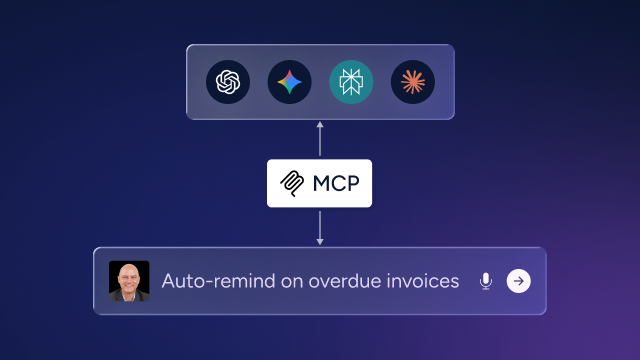
Many finance teams are also adopting conversational AI for financial automation to streamline invoice communication, payment reminders, customer queries, and workflow coordination while still keeping approval-sensitive financial decisions under human oversight. These workflows are low-risk because they're either pre-approved (the human made the decision upfront) or they're flagging, not approving (the AI surfaces what needs attention, but doesn't act). That's the sweet spot for scalable, controlled automation in finance.
Building AI finance governance into your stack
Governance isn't a policy document. It's infrastructure. If your revenue automation platform, ERP, or AI tool doesn't enforce the 3-tier framework natively, governance becomes a manual check that will eventually fail.
Here's what good AI governance looks like in a finance stack:
- Configurable approval thresholds. The system determines which transactions require human sign-off based on amount, account type, or entity. AI can draft up to the threshold. Above it, a controller gets a notification.
- Segregation of duties is preserved. AI cannot collapse maker-checker controls, the entity generating a transaction cannot be the one approving it.
- Audit trails that log AI decisions. Every AI-generated transaction includes: what the AI suggested, what rule it applied, and who (if anyone) reviewed it before execution.
- Human-in-the-loop finance checkpoints at defined gates. For Tier 2 workflows (AI executes, human oversees exceptions), the system tracks when exceptions were flagged, who reviewed them, and what action was taken.
- Threshold triggers that escalate to humans. If an AI process flags 20% more exceptions than usual, it shouldn't keep running autonomously. It should pause and notify a finance manager.
- Exception logging that survives audits. When AI flags an anomaly but doesn't act, that flag needs to be logged with enough context that an auditor can see why the system caught it and what a human did (or didn't do) in response.
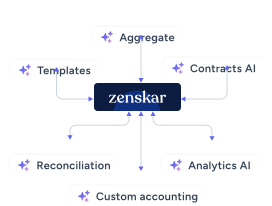
Zenskar's AI-native revenue automation is built on this foundation. Zen AI handles order-to-cash autonomously, with full audit trails and human approval gates at configurable thresholds. You define where AI acts. You define where humans review. Every decision is logged. Agents execute. Humans supervise. That's zero-touch finance.
Book a demo to see zero-touch finance in action.
By automating recurring billing with Zenskar, our billing cycle – which previously took 7–9 days – now closes in 2 days, saving 16-20 hours/month.

Frequently asked questions
AI should assist and execute within defined rules, but any decision involving judgment, materiality, or compliance must have human approval.
AI is risky in finance workflows because it removes accountability. Without a human approver, audit trails break, and decisions become difficult to justify under scrutiny.
Low-risk, rule-based workflows like recurring invoicing, usage calculations, and dunning sequences are safe when terms are pre-approved.
Humans should define rules, review exceptions, and approve high-risk transactions where context and judgment are required.
It includes approval thresholds, clear audit trails, and enforced human checkpoints for any transaction that could raise audit or compliance concerns.



Stay Future-Ready with AI-Native Order-to-Cash
Zenskar scales with you - it's flexible, reliable, and enterprise-ready.
