


The world was at its peak beauty without technology.
At least, that was the thought running through my head while watching a documentary about Europe. Krakow, Bucharest, Riga, Prague, Zagreb. I found myself imagining a life where you spend an hour preparing your coffee, another getting ready, another watching the flowers bloom on your balcony, and then take a two-hour lunch break over a glass of red wine on a Tuesday afternoon.
The documentary was clearly romanticising things. But it left me thinking about automation vs innovation, and whether we have started to confuse the two.
Krakow's Main Market Square, Prague's Old Town, Riga's Art Nouveau architecture. Cities where history isn't confined to museums but is embedded in the streets, the buildings, the cafés and the everyday rhythm of urban life. Something is fascinating about places that have managed to preserve so much of their past while continuing to live in the present.
I started imagining a time when post offices were still part of everyday life if you wanted to reach your loved ones. When you could sit somewhere without feeling compelled to document it, optimise it or turn it into something productive.
The world wasn't necessarily better back then. Life was harder in plenty of ways, and technology has undeniably improved it. But something about the pace of life feels different today.
Why does everyone feel busier in the age of AI?
AI tools save time on individual tasks, but they also raise the pace everyone is expected to keep. When productivity becomes the goal rather than a means to an end, the time we save gets spent on more work, not on rest.
We live in an era where intelligence is in the air. Artificial intelligence can write our emails, generate our code, analyse our finances, build our presentations and automate workflows that once consumed entire working days. And somehow, despite having more tools to save time than ever before, nobody seems to have any.
The youth are frustrated with employment prospects. Adults are struggling with rising living costs. Wars and geopolitical uncertainty continue to unfold around us. Everyone seems to be chasing, preparing and worrying about something all at the same time.
We're never still, only in motion. Somewhere along the way, productivity stopped being a means to an end and became an end in itself. It's as if being productive has become the success metric for life.
Is the fear that AI will replace us, or that we'll fall behind?
For most professionals, the fear isn't that AI will replace them tomorrow. It's that somebody else will figure out how to use it before they do.
And now, with AI, the pressure has reached another level. Every new model arrives with the promise of transforming the way we live. Every new product launch creates another reason to reconsider our workflows. Every founder is expected to have an AI strategy. Every professional is expected to figure out how artificial intelligence will affect their career.
You can see the same anxiety at the scale of nations in the US-China AI race.
We have confused the ability to move faster with the need to keep moving.
What is the difference between automation and innovation?
Automation makes an existing task faster or cheaper. Innovation changes what is possible, creating something that did not exist before.
Just because automation exists doesn't mean there's innovation. The difference is between making something faster and building something of substance, and I think it is particularly relevant to the fintech industry.
What can Mumbai's history teach us about innovation?
Mumbai became India's financial capital because its physical foundations were rebuilt. Land was reclaimed from the sea, and railways, mills and trade routes created commercial possibilities that had not existed before.
Before it became the financial capital we know today, Mumbai was an archipelago of seven islands, home to fishing communities of the Koli people.
In 1661, the islands passed from Portuguese control to the English Crown as part of Catherine of Braganza's dowry, and the Crown handed them to the East India Company in 1668.
Over the following centuries, reclamation projects such as the 18th-century Hornby Vellard gradually reshaped the geography of Bombay. Then came the infrastructure. India's first passenger train ran from Bombay's Bori Bunder to Thane on 16 April 1853. The city's first spinning and weaving mill opened in 1857, cotton trading boomed, and the opening of the Suez Canal in 1869 strengthened Bombay's position in international trade.
The city was physically transformed. Land was reclaimed from the sea, transport networks connected places that had once been separated, and infrastructure created new commercial possibilities. Transforming an entire city in an era is called Innovation.
What does automation vs innovation look like in fintech?
A financial product that lets someone complete a task in ten seconds is automation. A financial product that lets someone access financial services like never before is innovation.
Both get called innovation. But the first is an efficiency gain, however useful.
In the fintech world, automation is the one thing every business seems to claim and boast about. It can help teams perform drastically better, but outsourcing your thinking along with the work is counterproductive.
Is AI automation in finance just table stakes?
Increasingly, yes. Typing a request in plain language and getting results in real time is becoming the baseline, so what sets a finance system apart is the foundation underneath it.
If you're a finance person, the ideal scenario is that you type "view invoices due > 1 month" or "make payments above $1,000 to vendors based out of Arizona" and get results in real time. The automation and parsing aspect here is table stakes.
The system and the foundation are what matter.
Are you gluing something on top of the foundation, or are you building the foundation?
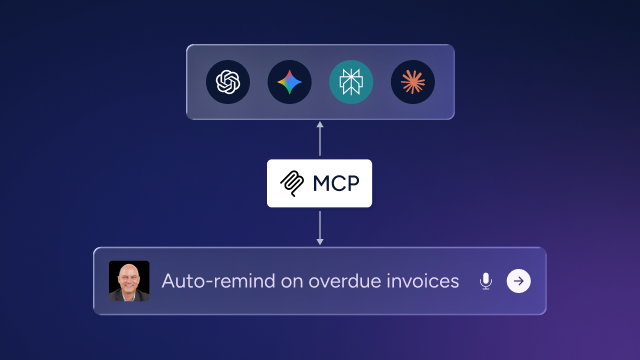
A finance professional who doesn't have to learn to code and can still use AI workflows is becoming more efficient. (This is the idea behind Zenskar's MCP.) But efficiency only lasts if the system underneath it was built for the work.
Should we slow down to innovate?
Slowing down isn't the opposite of progress. Recognising which problems are worth solving, which processes deserve to exist and which technologies genuinely improve our lives may matter more than adopting every new tool that comes along.
Even Sam Altman has conceded that change is arriving slower than the industry predicted. On David Senra's podcast in August 2026, he said AI timelines had been too ambitious because "the economy just has so much inertia". He called the slower transition a good thing, and predicted that people will increasingly want authentic, non-technological experiences.
Staying relevant in this era, with the technology we have, is extremely difficult. Perhaps the real innovation isn't in making everything faster. It's in building systems so much better that we finally have the freedom to slow down.
And somewhere between the streets of Prague and the hustle of Mumbai is where our hearts should be.
Frequently asked questions
Automation makes an existing task faster or cheaper. Innovation creates something new or changes what is possible, such as giving people access to services they never had.
Not by default. AI that speeds up an existing workflow is automation; it becomes innovation only when it changes what people can do or reach.
AI saves time on individual tasks, but it also raises the pace everyone is expected to keep. When productivity becomes the goal itself, saved time turns into more work.
It means designing the underlying system for the work, rather than gluing AI features on top of tools that weren't built for it. The plain-language interface is table stakes; the foundation decides what is possible.


By automating recurring billing with Zenskar, our billing cycle – which previously took 7–9 days – now closes in 2 days, saving 16-20 hours/month.



Stay Future-Ready with AI-Native Order-to-Cash
Zenskar scales with you - it's flexible, reliable, and enterprise-ready.
