What You'll Learn
- The 5-stage month-end close cycle: Understand where each stage breaks down with manual processes.
- Live balance sheet reconciliation: See exactly how to build deferred revenue workpapers in Excel, including the amortization formulas that actually work at scale.
- The prepaid expenses, accrued expenses, and deferred revenue challenge: How controllers manage these balance sheet accounts.
- What's changed in 2026: AI-enabled ledgers, automated bank feeds, modern revenue recognition tools. The philosophy of what's now possible.
- When to move beyond Excel: Conversational discussion about purpose-built revenue tools and what signals it's time to upgrade from spreadsheets.
Meet Your Instructor
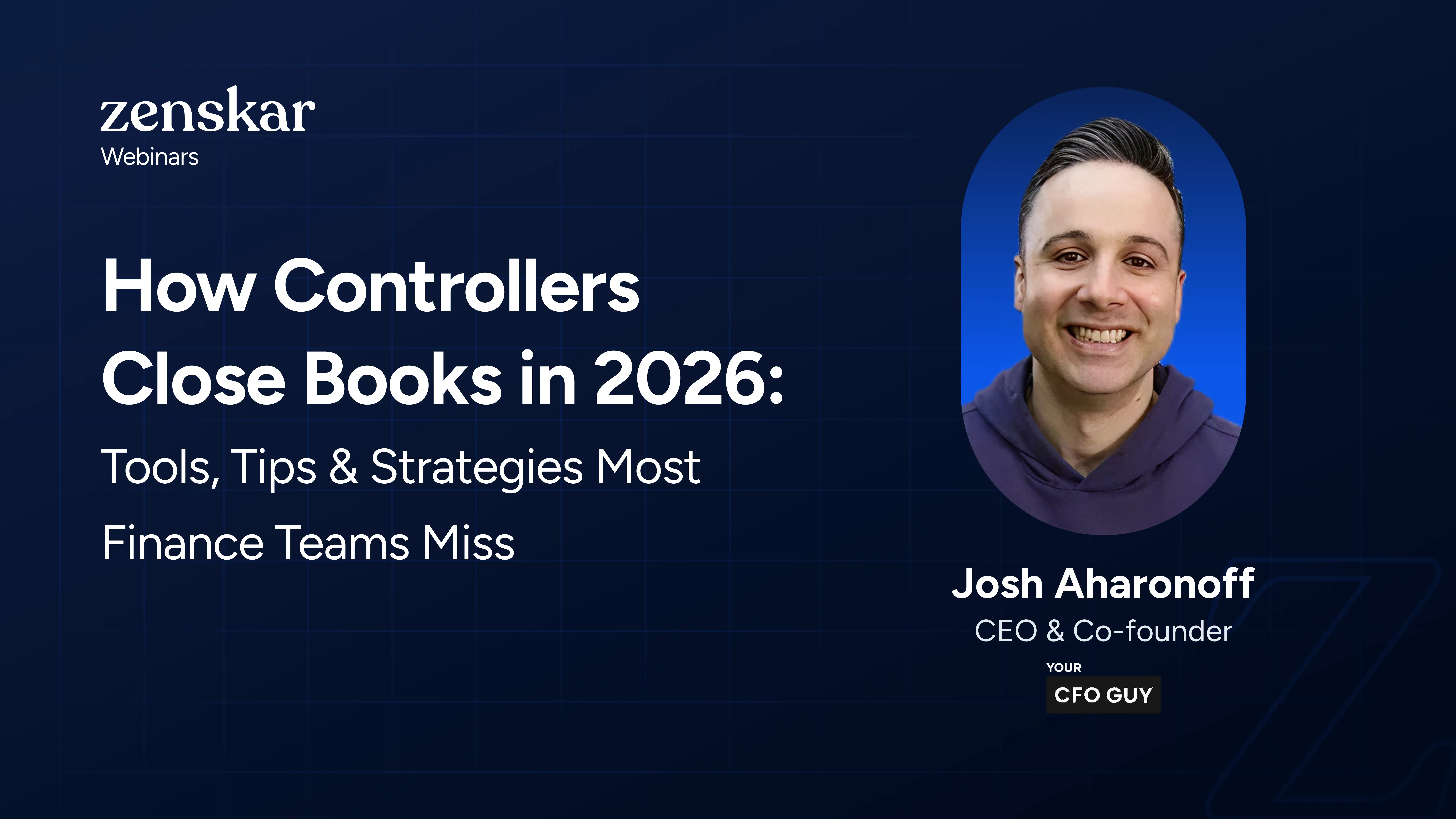
Josh Aharonoff, CPA
Founder @ Model Wiz, Your CFO Guy & Mighty Digits
Josh teaches finance and accounting to 400,000+ professionals. He specializes in month-end close processes, balance sheet reconciliation, and controller-level financial reporting.
Background:
- CPA and former controller at technology companies
- Fractional CFO working with B2B SaaS companies on finance operations
- Built accounting workflows for 100+ SaaS companies
- Microsoft Most Valuable Professional (MVP) for Excel (2024)
- Creator of Excel for Finance & Accounting course
Who Should Attend
Controllers, accounting managers, and senior accountants at B2B companies who are:
- Trying to close month-end books in the first week of the month
- Work with complex contracts (usage-based pricing, multi-element arrangements, variable terms)
- Currently use Excel workpapers to support balance sheet reconciliation
This is designed for controllers who already understand the close process. If you're looking for introductory accounting training, this will be too advanced.
Webinar summary
1. What was your approach to improving the month-end close process at your previous companies?
At Model Wiz, we focused on automating manual processes. For example, we automated the reconciliation of deferred revenue by leveraging AI. This helped us eliminate time-consuming manual checks and drastically reduced human errors. We also implemented a live dashboard that synced with QuickBooks, enabling real-time visibility into financials, so there was no need to wait for the month to close to analyze data.
2. How did you manage complexity in financial reporting while growing a business?
As we scaled, I realized the importance of streamlining data flows. At Mighty Digits, I set up automated financial reporting through templates, saving hours per month on manual entry. We used custom-built dashboards that aggregated financial data, offering management a 360-degree view of the business, which made decision-making faster and more accurate.
3. Can you describe a specific challenge you faced with revenue recognition, and how you overcame it?
One of the most significant challenges came from handling complex revenue streams. At Skill Silo, we faced a recurring issue with matching revenue to contracts with various payment terms. To solve this, we implemented a rule-based automation system in Excel for deferred revenue that matched payment terms with recognized revenue, eliminating manual errors and improving the accuracy of financial forecasts.
4. How did you handle the scalability of finance systems when expanding internationally?
While expanding internationally, the complexity of currency conversions and tax requirements increased. At Skill Silo, we implemented multi-currency support in our accounting system and integrated local tax rules into our finance platform. We created “dependency handshakes” across teams, ensuring that everyone was on the same page regarding financial data and exchange rates.
5. What strategy did you use to manage complex multi-entity consolidations?
For multi-entity consolidation, I adopted a “unified chart of accounts” strategy, where we standardized reporting formats across entities. This allowed us to streamline consolidation processes. For example, at Mighty Digits, the financial data from different subsidiaries in the US, UK, and Canada was standardized, reducing the time to reconcile across entities and currencies.
6. What role does AI play in transforming the finance function at Model Wiz?
AI is central to our approach at Model Wiz. By integrating AI into our financial models, we automated data classification and forecasting. For example, our AI tool recognizes patterns in transaction data, classifies them correctly, and generates real-time reports. This not only reduces manual work but also gives us time to focus on more strategic financial analysis.
7. How do you ensure accuracy when working with large volumes of financial data?
Accuracy is maintained by building an automated review and feedback loop. We rely on machine learning algorithms to identify discrepancies in financial data, such as missing entries or incorrect classifications. For example, in our monthly close process, our AI tools automatically flag inconsistencies in balance sheet accounts, reducing human error and speeding up the close process.
8. Can you share a real-world example of how your firm has helped companies improve financial decision-making?
At Model Wiz, we helped a client reduce their month-end close time by 40% by automating their financial reporting process. We implemented dashboards that provided real-time financial insights, allowing the finance team to quickly adjust strategies. This shift in focus from reactive to proactive decision-making was key in streamlining their financial operations.
9. How do you prioritize financial data during a close process?
I prioritize data that impacts business performance the most. At Mighty Digits, we focused on high-priority accounts, such as deferred revenue and accounts payable, which directly influenced cash flow. Once these were reconciled, we moved on to less critical data. This approach ensured that the most important financial indicators were accurate, reducing the chance of surprises at the end of the month.
10. What advice would you give CFOs looking to scale finance operations without adding headcount?
My advice is to implement AI-driven automation tools to eliminate manual work. By doing this, you can free up resources for more strategic initiatives. For example, at Model Wiz, we automated financial modeling, freeing up the team to focus on strategic analysis rather than crunching numbers. This enabled us to scale operations without hiring additional staff, thus increasing efficiency and reducing costs.
If you're a controller managing complex contracts alongside your close process, our RevRec edge cases webinar is your next watch.