
Unified Billing and Revenue Recognition: How to Tell Real Unification From Packaging
Billing and revenue recognition may sit next to each other in the finance stack, but they often run on separate systems, data models, and timelines. Billing turns contract terms and usage into invoices, while revenue recognition determines when that revenue should be recognized. When those systems interpret the same contract differently, every amendment, usage correction, credit, or mid-cycle upgrade can create another reconciliation task.
The complexity compounds for B2B companies with usage-based pricing, prepaid credits, tiered pricing, minimum commitments, or multi-entity contracts. Finance teams can end up reconciling contract terms, usage, invoices, and revenue schedules across systems, and relying on spreadsheets or engineering support to resolve exceptions.
A unified billing and revenue recognition platform takes a different approach: both processes work from the same underlying contract context. But what does “unified” actually mean? And how can you tell whether a platform truly delivers it?
What does unified billing and revenue recognition actually mean?
“Unified billing and revenue recognition” can describe very different architectures. A shared login or database does not necessarily mean both processes use the same contract logic.
There are three levels to look for:
1. Two systems, one vendor
Billing and revenue recognition may come from the same vendor but still run as separate applications. Data moves through scheduled syncs or an integration layer.
This can reduce vendor management, but the handoff remains. Ask which system owns the contract and what happens when the systems disagree.
2. Shared database, separate models
Billing and revenue recognition may use one database while maintaining separate contract representations. Billing has one model for invoices and charges; RevRec has another for performance obligations and schedules.
This can work for simple contracts, but amendments, usage-based billing, or credits can expose gaps between the models.
3. One contract record
The strongest form of unification is when billing and mid-contract revenue recognition work from the same underlying contract record. Commercial terms, pricing, billing rules, and revenue recognition logic stay connected while each process applies its own deterministic rules.
A contract changes over time. Products, pricing, usage, credits, entities, and terms can all change. Representing those changes once gives both processes the same underlying facts.
What happens when billing and revenue recognition run on separate systems?
The biggest problems appear when a contract or its underlying data changes after signing.
1. When a contract is amended mid-term
A mid-term pricing or product change can require billing to recalculate charges while revenue recognition reassesses affected performance obligations.
Under ASC 606 and IFRS 15, the accounting treatment depends on the nature of the modification. Depending on the applicable conditions, a modification may be accounted for as a separate contract, prospectively, or through a cumulative catch-up.
2. When usage is corrected after invoicing
If usage is corrected after invoicing, the correction may affect the invoice, credit, revenue schedule, or accounting period. When billing and revenue recognition consume separate copies of usage data, both sides need to be updated consistently.
3. When a customer upgrades mid-cycle
An upgrade can change pricing, entitlements, billing, and remaining revenue treatment at once. Updating only the invoice can leave finance with a separate reconciliation exercise.
4. When usage is recorded at period end
Timing matters at period end. Usage recorded near the end of a month needs to be handled consistently with the accounting period and applicable recognition rules. Separate ingestion schedules can create differences that surface during close or audit.
<iframe src="https://www.linkedin.com/embed/feed/update/urn:li:ugcPost:7484888917922619392?collapsed=1" height="541" width="504" frameborder="0" allowfullscreen="" title="Embedded post"></iframe>
5. When a credit note reverses a charge
If a credit note simply voids and reissues an invoice to correct information such as an email address, revenue should not change. If the credit note reflects a genuine reduction in the service or value delivered, revenue may need to change. The billing system knows a credit note was issued, but it may not know why.
The common thread is that contract changes and timing events create more reconciliation points when billing and revenue recognition do not share the same underlying facts.
Entitlements also need a clear boundary. Credit and entitlement balances represent usage rights or access rights. They are not, by themselves, cash, financial liabilities, or revenue, and they are not automatically reconciled with financial transactions.
Finance still needs to determine the accounting treatment that applies to the underlying contract and activity.
Note: This article is for informational purposes only and is not accounting or audit advice. Contract modification treatment should be validated with the company's accounting policies and auditors.
What does a unified billing and revenue recognition platform actually solve?
The value of unification is not having fewer software logos. It is having one consistent source of truth for the contract and the changes that happen to it.
When billing and revenue recognition work from the same contract context, a change can flow through the relevant calculations without requiring finance to recreate that context in another system. That can change the operational burden for finance teams:
The accounting logic still needs to be deterministic and auditable. Unification does not mean skipping controls or treating billing as a proxy for revenue recognition. It means the calculations start from consistent underlying facts.
Zenskar brings billing and revenue recognition together on a unified platform, keeping contracts, usage, billing, and revenue data connected. This gives finance teams one connected view instead of managing these workflows in silos.
What should you test before calling a billing and revenue platform truly unified?
“Unified” is easy to claim and harder to prove. Put the architecture under pressure with four tests.
1. Can it hold your contract as signed?
Test discounts, tiers, credits, minimums, amendments, entities, and currencies together.
Test: Bring your most complex contract and ask the vendor to configure it live.
2. Is recognition driven by obligations or invoices?
Revenue recognition should follow contract obligations, not simply billing events.
Test: Ask what happens with an off-cycle invoice or retroactive amendment.
3. Does the same usage data drive both sides?
The usage behind an invoice should also drive revenue calculations.
Test: Ask how usage corrections are handled after invoicing.
4. Which numbers does AI calculate?
Financial calculations should use deterministic logic, while AI handles tasks such as extraction and workflow execution.
Test: Ask what AI controls and where human approval is required.
How does Zenskar handle contract amendments without engineering support?
A contract amendment is where a unified architecture has to prove itself. Zenskar models the agreement as a contract record, with phases representing changes in commercial terms over time. Its graphical data model represents products, pricing, discounts, usage, credits, amendments, entities, and currencies as connected contract objects. Billing and revenue recognition operate from that contract context, while usage is metered separately from pricing.
Consider a customer with a $12,000 annual platform fee, tiered usage, and prepaid credits. Six months into the contract, the customer adds a product, moves to a higher usage tier, and receives a pricing adjustment.
The accounting outcome depends on the approved modification and applicable accounting policy, but the operational flow can be represented in one place:
- Billing recalculates charges for the amended terms and issues an adjustment or credit when required.
- The remaining performance obligations are reassessed based on the modification and applicable accounting treatment.
- The credit balance is updated according to the contract's credit rules, without treating the balance itself as revenue.
- The resulting revenue schedules and journal entries are updated and sent to the ERP.
The platform automates the mechanics. Finance still determines the accounting policy, approves exceptions, and determines whether an enforceable contract exists.
No engineering workaround does not mean no accounting judgment. The platform automates the mechanics; finance still controls the policies and approvals.
Where does Zenskar sit in your finance stack?
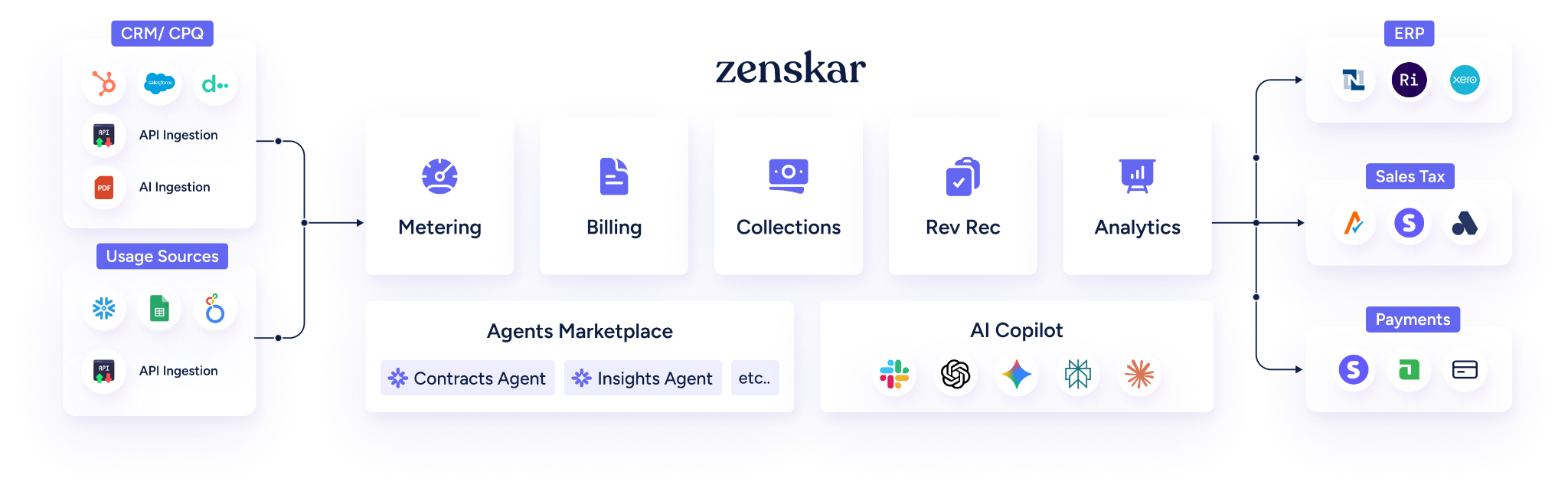
Zenskar sits between your CRM or CPQ and your ERP, running the order-to-cash processes in between.
Contracts can enter through CRM/CPQ systems, AI-powered document ingestion, APIs, or hosted checkout. Usage can come from connected data sources, API events, or CSV files. Zenskar then handles the commercial and revenue workflows before sending accounting entries to the ERP.
Zenskar works alongside the finance systems teams already use, connecting billing, revenue recognition, payments, tax, and accounting workflows. It integrates with payment gateways, tax platforms such as Avalara and Anrok, and accounting systems such as NetSuite, QuickBooks, Xero, and Zoho Books. With support for a broad range of integrations, Zenskar helps finance teams connect these systems without replacing the tools that already run their business.
The scope is intentional: Zenskar focuses on the operational layer between what was sold and how it gets accounted for.
When is it worth consolidating billing and revenue recognition?
Not every company needs a unified billing and revenue recognition tool. If pricing is simple, contracts rarely change, and revenue schedules are straightforward, separate systems may be adequate.
The case for consolidation becomes stronger when complexity is routine:
- Usage-based or highly customized pricing
- Frequent contract amendments
- Prepaid credits, minimums, or overages
- Multiple entities or currencies
- Spreadsheets driving deferred revenue
- Recurring close adjustments or audit findings
A useful threshold is simple: if finance spends more time reconciling how a contract was represented than reviewing whether the accounting is correct, the architecture may be the problem.
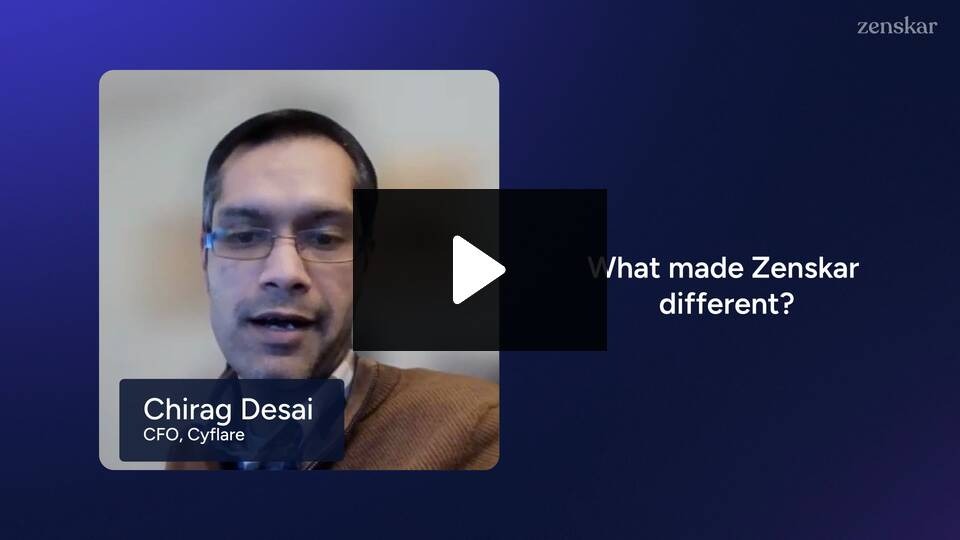
Cyflare is one example of this kind of complexity. Its partner contracts include different usage metrics, pricing exceptions, minimum commitments, entitlement tiers, and amendments.
According to Cyflare CFO Chirag Desai, its billing cycle previously took seven to nine days and now closes in two days, with 16 to 20 hours of work eliminated from the billing week. The company also uses Zenskar as a single source of truth for partner pricing and contract configuration.
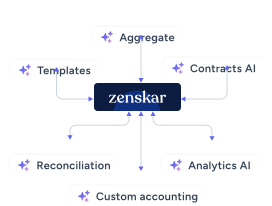
Zenskar brings billing and usage management, entitlements, and revenue recognition together around a single contract context, with deterministic financial calculations and AI-native automation.
Book a free demo or watch our product tour to see how Zenskar automates complex billing and revenue recognition for B2B businesses.
By automating recurring billing with Zenskar, our billing cycle – which previously took 7–9 days – now closes in 2 days, saving 16-20 hours/month.

Frequently asked questions
Billing determines what a customer is charged and when an invoice is issued. Revenue recognition determines when that revenue can be recognized under the applicable accounting guidance. The two are connected but not interchangeable. An invoice may precede revenue recognition, creating deferred revenue, while revenue can sometimes be recognized before invoicing.
Integrating billing and revenue recognition keeps contract terms, billing events, usage data, and revenue calculations connected. This reduces the need for manual reconciliation between separate systems and helps finance teams trace revenue outcomes back to the underlying contract. It is especially useful for complex pricing, amendments, credits, usage-based billing, and other changing contract terms.
Yes. A unified platform can manage billing and revenue recognition around a shared contract context while keeping the two processes distinct. Billing can handle pricing, invoicing, and usage, while revenue recognition applies the relevant accounting rules. This approach can reduce reconciliation between systems while allowing the ERP to remain the general ledger system of record.
Complex billing can make revenue recognition harder when contracts include usage, amendments, credits, minimums, or multiple performance obligations. An invoice amount does not automatically determine recognized revenue. Revenue depends on the applicable accounting guidance and satisfaction of performance obligations. Connecting contract and transaction data helps finance teams identify differences between billing outcomes and revenue recognition.
Aligning billing with revenue recognition ensures both processes use consistent contract and transaction data while applying their own rules. This is particularly important when contracts change or include complex pricing. A connected approach helps finance teams trace contract events through billing and revenue accounting, reducing reconciliation work while preserving the accounting logic required for accurate revenue recognition.


Stay Future-Ready with AI-Native Order-to-Cash
Zenskar scales with you - it's flexible, reliable, and enterprise-ready.
